
Could Hidden Mould Be Affecting Your Indoor Air Quality?
Most Australians have encountered mould at some point. It may appear on a bathroom ceiling, around a window frame or on a wall following a roof leak. Many homeowners view it as an unpleasant but manageable problem — clean the surface, repaint and move on.
Mould is often a symptom of something larger. Moisture can remain hidden within a building long before visible growth appears. By the time staining, odours or fungal growth become obvious, contamination may already be established inside wall cavities, roof spaces or other concealed areas. This is where conversations about mould often lead to questions about mycotoxins and their potential role in indoor environments.
If you believe your property may require air testing, surface testing or a professional mould investigation, contact Air Quality Australia for expert advice. Identifying the source of a mould problem early can help prevent extensive contamination and costly repairs.
Why Are More Australians Talking About Mycotoxins?
Interest in mycotoxins has grown considerably over the past decade. Part of this can be linked to greater awareness of indoor air quality and building health. Homeowners are becoming more informed about the relationship between water damage, mould growth and the overall condition of their indoor environment.
Australia has also experienced numerous flooding events, severe storms and water-damaged properties in recent years. These events have highlighted the importance of proper drying, mould remediation and environmental investigation. As more people seek answers about contamination inside buildings, mycotoxins have become a topic of growing interest among property owners, environmental consultants and building professionals.
Why Does This Matter for Homeowners?
Most homeowners are not interested in scientific terminology. They simply want to know whether their property is safe, whether moisture problems exist and what steps should be taken to resolve them. Understanding mycotoxins helps provide context when investigating mould-related concerns.
Rather than focusing solely on visible mould growth, homeowners should consider the broader picture. Moisture intrusion, building defects, poor ventilation and hidden contamination often play a much larger role than the mould that can be seen on a surface.
What Are Mycotoxins?
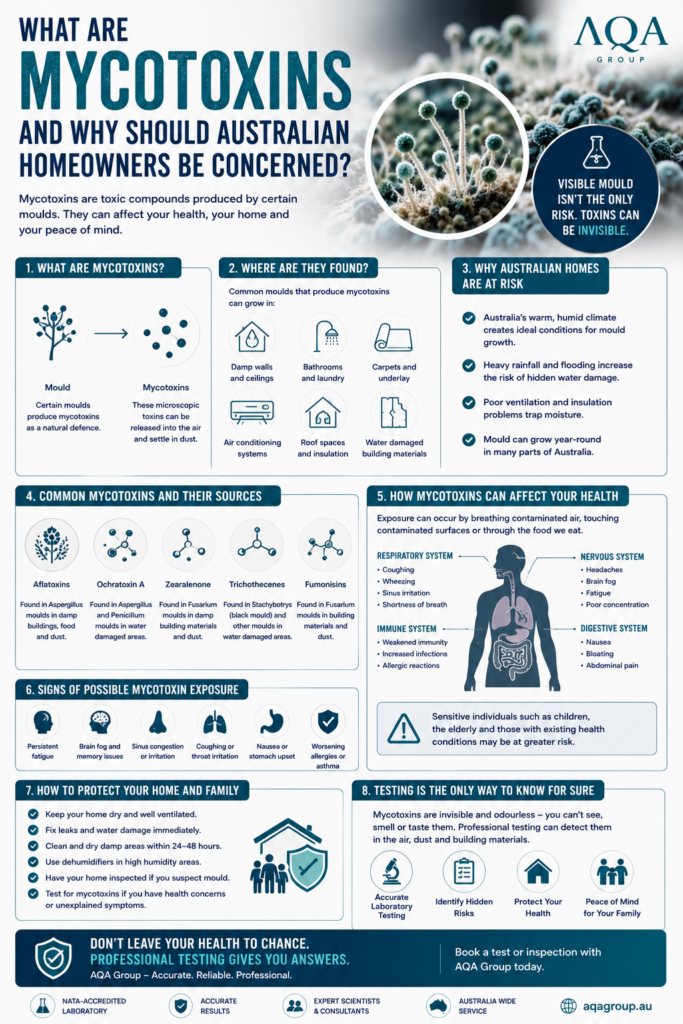
Mycotoxins are naturally occurring compounds produced by certain species of fungi. Scientists classify them as secondary metabolites because they are created as part of a mould’s biological processes. Hundreds of different mycotoxins have been identified worldwide, although only a relatively small number are commonly discussed in relation to indoor environments.
These compounds are not unique to buildings. Mycotoxins can be found throughout nature and are often studied in agriculture, food production and environmental science. When mould develops inside a water-damaged building, questions sometimes arise about whether mycotoxins may also be present within the affected environment.
Are Mycotoxins the Same as Mould?
No. One of the most common misconceptions is that mould and mycotoxins are interchangeable terms. Mould is the living fungal organism that grows on damp materials. Mycotoxins are compounds that some mould species may produce under certain environmental conditions.
A useful comparison is to think of mould as the tree and mycotoxins as one of the products that the tree may create. While they are connected, they are not the same thing. A property may contain visible mould without measurable mycotoxins, while contamination concerns may exist even when mould growth is not immediately obvious.
Can Every Type of Mould Produce Mycotoxins?
Not all mould species produce mycotoxins. Many moulds commonly found in Australian homes are not known for mycotoxin production. Other species may have the potential to produce them but only under specific environmental conditions.
Moisture levels, temperature, available nutrients and the age of the fungal colony can all influence whether mycotoxins are produced. This is one reason why professional investigations rely on evidence rather than assumptions. Two properties may contain similar mould growth while having very different environmental conditions and contamination profiles.
How Are Mycotoxins Produced Indoors?
Most indoor mould problems begin with moisture. Without moisture, mould cannot grow. This simple fact sits at the centre of nearly every mould investigation conducted within residential and commercial buildings.
When building materials remain damp for extended periods, mould can begin colonising affected surfaces. If favourable conditions continue, fungal growth may spread through the contaminated area. Under certain circumstances, some mould species may also produce mycotoxins as part of their natural biological processes.
What Conditions Encourage Mould Growth?
Mould thrives when moisture combines with organic material and limited airflow. Common building materials such as plasterboard, timber, paper-backed insulation and carpet underlay can all provide suitable conditions when they become damp.
Poor ventilation often contributes to the problem. Bathrooms, laundries, roof spaces and areas with persistent condensation frequently experience elevated moisture levels. If these conditions remain unresolved, mould colonies may continue to develop and expand.
How Quickly Can Mould Develop After Water Damage?
Many people underestimate how quickly mould can establish itself. Under favourable conditions, fungal growth may begin within 24 to 48 hours following a water intrusion event. Even a relatively minor plumbing leak can create problems if it goes unnoticed.
Flooding events present an even greater challenge. While surfaces may appear dry after water has been removed, moisture often remains trapped inside building materials. If professional drying is not completed, mould growth can continue developing long after the original water damage occurred.
How Do Mycotoxins Enter Australian Homes?
Mycotoxins do not simply appear inside a building without a cause. Their presence is linked to mould growth, and mould growth is almost always linked to moisture. Understanding how water enters a property is the first step in understanding how contamination develops.
In many cases, moisture problems begin gradually. A small roof leak, a failed waterproof membrane or a slow plumbing leak may introduce water into concealed building cavities. Because the process is often slow, contamination can continue developing for months before anyone notices obvious signs.
Can Water Damage Lead to Hidden Contamination?
Water damage is one of the leading causes of mould contamination in Australian homes. Unfortunately, many moisture problems remain hidden long after the original event. Building materials can absorb and retain water, creating ideal conditions for mould growth within concealed spaces.
Plasterboard, insulation, timber framing and flooring materials can all remain damp even when surfaces appear dry. By the time visible staining, odours or mould growth appear, contamination may already be widespread within the affected area.
Where Is Hidden Mould Commonly Found?
In many of the properties we inspect, mould is discovered in areas homeowners rarely think to check. Wall cavities, roof spaces, subfloors and air conditioning systems are among the most common locations where contamination develops.
These areas often provide everything mould needs to thrive — moisture, limited airflow and organic material to colonise. As a result, contamination can continue developing unnoticed until symptoms become obvious.
Why Are Australian Homes Particularly Vulnerable?
Australia’s climate presents unique challenges for moisture management and mould prevention. While mould can develop in any building given the right conditions, many Australian homes experience environmental factors that increase the likelihood of moisture-related problems.
High humidity, severe weather events and seasonal rainfall patterns can all contribute to indoor conditions that support mould growth. The issue is not limited to tropical regions. Coastal areas, flood-prone communities and even temperate parts of the country can experience persistent moisture problems.
How Does Humidity Affect Indoor Air Quality?
Humidity plays an important role in the development of mould within residential properties. When the air contains excessive moisture, condensation can form on cooler surfaces such as windows, walls and ceilings. Over time, this repeated moisture exposure creates conditions that allow mould to establish and spread.
Many Australian homeowners notice condensation during cooler months but do not realise it may indicate a larger moisture management issue. Bathrooms, laundries and bedrooms are particularly vulnerable because moisture levels often rise through everyday activities such as showering, cooking and drying clothes indoors.
Can Flooding and Storm Damage Create Long-Term Problems?
Flooding events have become a serious concern across many parts of Australia. While the immediate focus is often on removing water and restoring damaged property, the long-term effects of moisture are sometimes overlooked.
Building materials may retain water long after surfaces appear dry. Insulation, timber framing and plasterboard can hold moisture for extended periods, particularly in areas with limited airflow. This is why professional drying and moisture assessment are often recommended following flooding or significant water damage.
Does Modern Home Design Play a Role?
Modern homes are generally more energy efficient than older properties. Improved insulation, tighter building envelopes and enhanced thermal performance all provide real benefits. However, these same features can reduce natural airflow if ventilation is not properly managed.
When moist air becomes trapped indoors, humidity levels can rise and condensation may develop on cooler surfaces. Over time, this can create favourable conditions for mould growth, particularly in areas where ventilation is inadequate.
What Are the Warning Signs of a Hidden Mould Problem?
One of the challenges associated with mould contamination is that the problem is not always visible. Many homeowners assume they will see mould growing on walls or ceilings if contamination is present. In reality, mould frequently develops in concealed locations where it may remain hidden for months or even years.
Recognising early warning signs can help identify moisture issues before they become serious contamination problems. Visible mould is one indicator, but other signs often appear much earlier and should not be ignored.
What Visible Signs Should Homeowners Look For?
Visible indicators of moisture problems often include water staining, bubbling paint, peeling plaster and discolouration on walls or ceilings. These symptoms suggest moisture is present within the building and may indicate conditions suitable for mould growth.
While these signs do not automatically confirm mould contamination, they should always be investigated further. Repainting over water stains or repeatedly cleaning affected areas without addressing the moisture source rarely solves the underlying problem.
Can Mould Be Present Without Being Visible?
Yes. Hidden mould is far more common than many homeowners realise. Some of the most extensive contamination we encounter occurs in locations that cannot be easily inspected without specialist equipment or invasive investigation.
A persistent musty odour is often one of the strongest indicators of hidden mould. Homeowners may also notice recurring condensation, damp indoor conditions or mould that repeatedly returns despite cleaning efforts.
When Should Homeowners Consider Mould or Mycotoxin Testing?
Not every mould issue requires laboratory testing. If visible mould growth is present and the moisture source is obvious, addressing the cause of the problem is usually the first priority. However, there are situations where testing can provide valuable information and assist with decision-making.
Environmental testing should be viewed as one tool within a broader investigation process. The goal is not simply to collect samples but to answer specific questions about the building and the nature of the contamination.
What Situations May Require Further Investigation?
Testing may be appropriate when mould contamination is suspected but cannot be located, when indoor air quality concerns persist or when significant water damage has occurred. It can also be useful when remediation work has been completed and verification is required.
When contamination continues returning or the source remains unclear, a professional assessment combined with targeted testing can provide valuable insights into the condition of the property.
Which Testing Methods Are Available?
Several testing methods are commonly used during mould investigations. Air sampling can help assess airborne contamination, while surface testing may identify contamination on building materials and furnishings. Dust analysis can provide information about contamination that has accumulated within the indoor environment over time.
Mycotoxin testing is another specialised option that may be considered when specific concerns exist regarding fungal by-products. The most appropriate testing strategy depends on the goals of the investigation and should be determined based on the evidence available.
Why Is Finding the Moisture Source So Important?
When discussing mould and mycotoxins, it is easy to focus on laboratory results and testing methods. Experienced indoor environmental professionals, however, generally begin with a much simpler question: where is the moisture coming from?
Without identifying and addressing the source of moisture, any remediation effort is unlikely to provide a lasting solution. Mould is a symptom of a moisture problem, not the cause.
What Happens If the Underlying Cause Is Not Fixed?
If the moisture source remains present, mould is likely to return regardless of how thoroughly the affected area has been cleaned. This is one of the most common reasons homeowners experience recurring mould problems.
Whether the issue involves a roof leak, plumbing failure, rising damp or poor ventilation, controlling moisture remains the foundation of effective mould prevention and remediation.
How Do Professionals Identify Moisture Problems?
Professional investigations often involve visual inspections, moisture measurements, thermal imaging and building assessments. These tools help identify hidden moisture sources that may not be apparent during a routine inspection.
By understanding how water enters and moves through a building, investigators can develop targeted recommendations that address the root cause of contamination rather than simply treating the symptoms.
When Should You Seek Professional Advice?
Many minor mould issues can be resolved by correcting the moisture source and cleaning affected surfaces appropriately. Larger contamination events, however, often require specialist input.
Properties affected by flooding, recurring mould growth, persistent odours or suspected hidden contamination may benefit from a professional assessment to determine the extent of the problem.
How Can a Professional Assessment Help?
A qualified indoor environmental professional can identify moisture sources, evaluate contamination pathways and recommend appropriate testing when required. This evidence-based approach helps ensure decisions are based on facts rather than assumptions.
Professional investigations can also help homeowners avoid unnecessary remediation costs by identifying the true source of the problem before corrective work begins.
What Steps Can Homeowners Take to Reduce Risk?
The most effective way to reduce the risk of mould and potential mycotoxin contamination is to control moisture. Promptly repairing leaks, improving ventilation and responding quickly to water damage can greatly reduce the likelihood of mould growth.
Regular inspections, good building maintenance and attention to indoor humidity levels can also help prevent problems from developing in the first place.
Need Help Investigating a Mould Problem?
If you are concerned about mould growth, water damage, indoor air quality or potential mycotoxin contamination, Air Quality Australia can help. Our team provides professional inspections, air testing, surface testing and evidence-based assessments to help identify the source of contamination and recommend practical solutions.
Contact Air Quality Australia today to discuss your concerns and determine whether testing may be appropriate for your property.
What Should You Read Next?
Now that you understand what mycotoxins are and how they can develop within water-damaged buildings, the next step is understanding how they are detected.
Continue reading: Understanding ELISA Testing for Mycotoxins: How Does It Work and When Is It Used?