Could Surface Testing Help Identify Hidden Contamination?
Many homeowners assume that if mould is not visible, there is no problem. Unfortunately, mould investigations are rarely that simple. Some contamination issues develop slowly, particularly in areas affected by ongoing moisture problems. Water may enter a building through a leaking roof, a failed waterproof membrane or a hidden plumbing issue and remain unnoticed for months. During this time, mould can develop on building materials and contamination may begin accumulating on surrounding surfaces.
This creates a challenge for homeowners and investigators alike. While visible mould may provide obvious clues, not all contamination can be identified through visual inspection alone. This is one reason why surface testing has become an important investigative tool. Rather than focusing on what may be present in the air at a specific moment, surface testing examines contamination that has settled onto materials over time. In some situations, this can provide valuable insight into the history and extent of a contamination issue.
If you are concerned about mould growth, water damage or possible contamination within your property, Air Quality Australia can help determine whether surface testing may be appropriate. Understanding what is happening on building materials and household surfaces can provide valuable information during a mould investigation.
Why Do Investigators Test Surfaces?
Environmental investigations are designed to answer questions. Is contamination present? How extensive is it? Has a water-damaged area been affected? Has remediation work been successful? Surface testing may help provide information that contributes to answering these questions.
Surface testing should never be viewed as a standalone solution, however. Experienced investigators do not collect samples simply for the sake of testing. Testing is used to support a broader investigation that includes visual inspections, moisture assessments and an understanding of the building’s history. When used appropriately, surface testing can help create a clearer picture of what is occurring within a property.
Why Isn’t a Visual Inspection Always Enough?
A visual inspection remains one of the most important parts of any mould investigation. Visible mould growth, staining, peeling paint and moisture damage all provide valuable clues about the condition of a building. However, visual inspections have real limitations.
Contamination does not always occur in obvious locations. Dust, fungal fragments and other contaminants can settle onto surfaces throughout a property. We frequently encounter properties where visible mould has been cleaned or painted over before an investigation takes place, leaving no obvious visual evidence behind. Surface testing may help identify evidence of contamination that would otherwise be difficult to assess through observation alone.
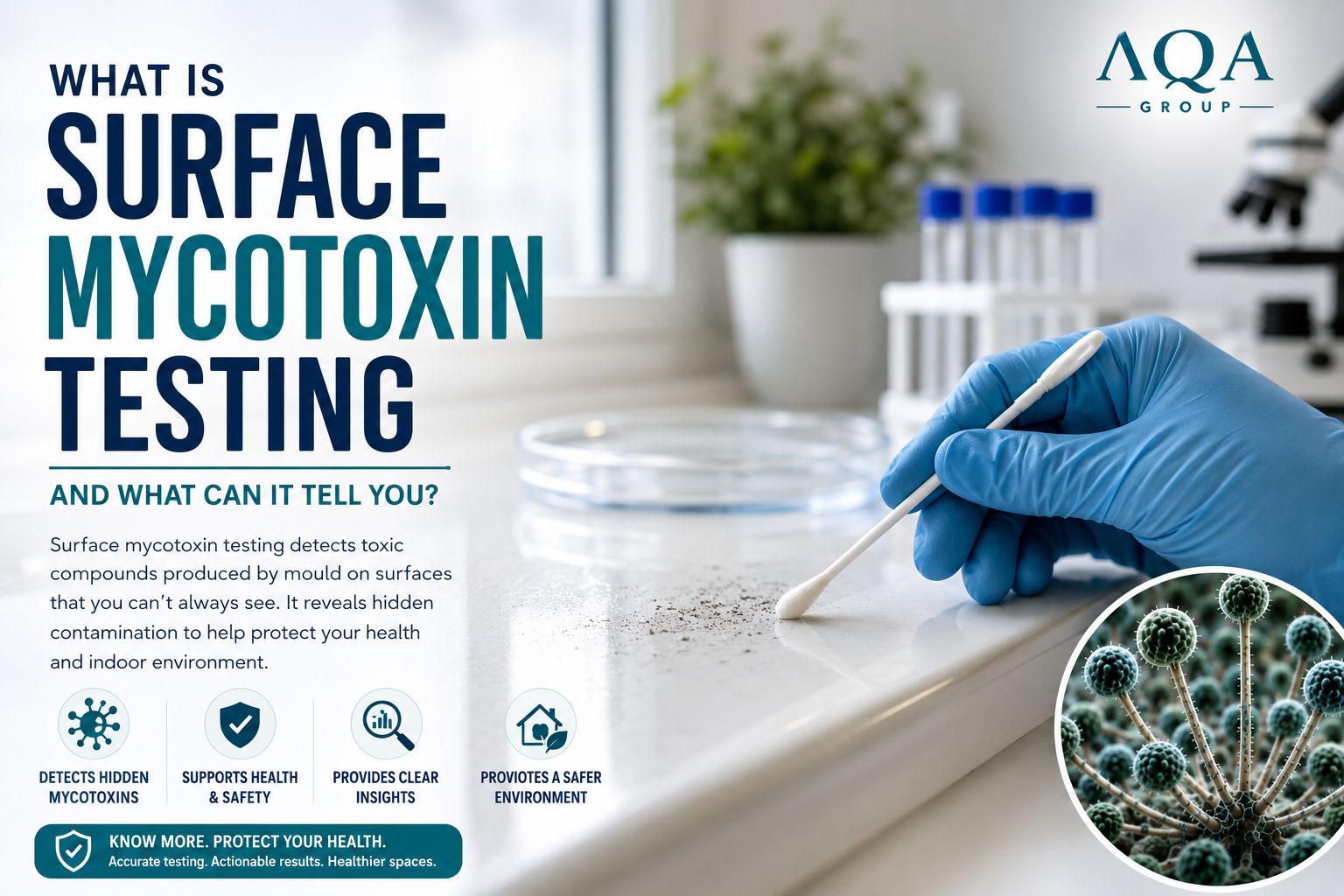
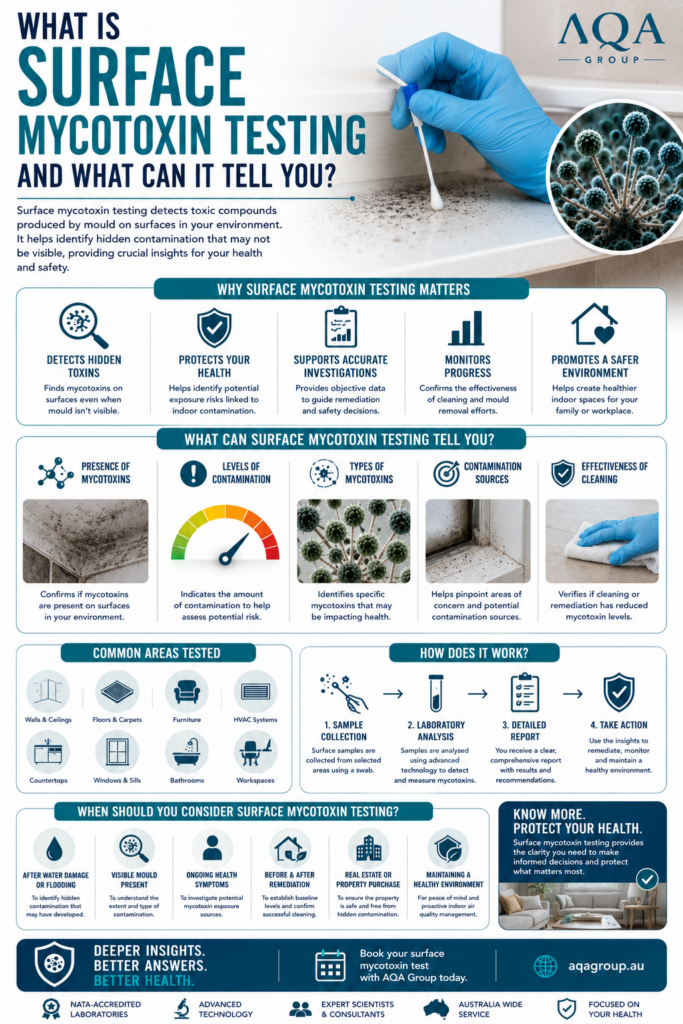
What Is Surface Mycotoxin Testing?
Surface mycotoxin testing is designed to assess contamination that has accumulated on a specific material, object or building surface. Rather than examining airborne conditions, the testing focuses on what has settled onto the sampled area over time. This makes it particularly useful when investigating water-damaged materials, suspected contamination or areas where mould growth may have previously occurred.
One testing method discussed in the podcast was MESA testing, which is designed specifically for surface mycotoxin analysis. Like other environmental testing methods, it is not intended to replace a building assessment. Instead, it provides information that may help investigators better understand conditions within the property.
What Makes Surface Testing Different From Air Testing?
Air testing and surface testing are often discussed together, but they serve different purposes. Air testing evaluates what is present in the air at the time a sample is collected. Surface testing examines contamination that has accumulated on a material or object over a longer period.
A useful way to think about the difference is to compare a snapshot with a historical record. Air testing provides information about current airborne conditions. Surface testing may reveal evidence of contamination that has been settling onto surfaces over time. Neither method is automatically superior to the other. Each provides different information and may be useful under different circumstances.
Can Surface Testing Reveal Past Contamination?
One reason investigators sometimes use surface testing is that contamination can remain on surfaces long after the original moisture problem has been resolved. Even when visible mould has been removed, traces of contamination may still be present on affected materials.
This can be particularly relevant in properties with a history of water damage. We often assess properties where a leak occurred months or years earlier and homeowners remain uncertain about whether contamination was properly addressed. Surface testing may contribute information that helps investigators better understand the property’s environmental history.
When Might Surface Mycotoxin Testing Be Useful?
Not every mould investigation requires surface testing. In many situations, visible mould growth and obvious moisture issues provide enough information to begin corrective action. There are circumstances, however, where additional information may help clarify the situation.
The decision to perform testing should always be based on the objectives of the investigation. Collecting samples without a clear purpose rarely provides meaningful answers. Understanding why testing is being performed is often just as important as the results themselves.
Can Surface Testing Help During Water Damage Investigations?
Water damage is one of the most common reasons environmental investigations are conducted. Following a roof leak, plumbing failure or flooding event, property owners often want to understand the extent of contamination within the affected area.
Surface testing may assist investigators by providing information about building materials that have been exposed to moisture. Combined with moisture measurements and visual inspections, the results can contribute to a more complete understanding of the property’s condition.
Is Surface Testing Useful After Remediation?
Many homeowners invest considerable time and money into mould remediation. Once the work has been completed, it is natural to want reassurance that the contamination has been properly addressed.
Surface testing may be used as part of a post-remediation assessment. While no single test can guarantee success, testing can provide information that contributes to evaluating conditions following remediation work. The results are most useful when considered alongside visual inspections and moisture assessments.
What Information Can Surface Testing Provide?
Surface testing provides information about the specific material or area being sampled. Unlike air testing, which evaluates airborne conditions, surface testing focuses on contamination that has settled onto a surface over time.
This information may help investigators understand contamination pathways, assess the impact of water damage or evaluate whether certain materials have been affected. The results can be valuable when used as part of a broader assessment strategy.
Can Surface Testing Identify Contaminated Materials?
In some situations, yes. Surface testing may help identify contamination on walls, ceilings, flooring materials, furniture or other building components. This information can be useful when determining whether materials have been affected by moisture-related contamination.
The results may also contribute to decisions regarding remediation, cleaning or material replacement. They should never be interpreted in isolation, however. Understanding how contamination developed remains just as important as confirming its presence.
Can Surface Testing Explain Why Contamination Developed?
No. This is one of the most important limitations homeowners should understand.
Testing may reveal that contamination exists on a surface, but it does not automatically explain why it developed or where the moisture originated. Identifying the source of contamination requires a broader investigation that includes building assessments, moisture measurements and professional interpretation.
What Are the Limitations of Surface Mycotoxin Testing?
Every testing method has strengths and limitations. Surface testing can provide valuable information, but it cannot answer every question about a property.
Understanding these limitations helps ensure realistic expectations and allows results to be interpreted appropriately within the context of the overall investigation.
Does One Sample Represent an Entire Property?
No. One of the most common misconceptions is that a single sample can describe conditions throughout an entire building. In reality, results only reflect the specific area that was sampled.
Different rooms, building materials and locations within the same property may have completely different contamination profiles. This is why sample selection matters. Experienced investigators choose locations based on evidence, building history and the objectives of the investigation.
Can Surface Testing Replace a Full Building Assessment?
No.
A laboratory report cannot identify a roof leak, determine whether a waterproof membrane has failed or explain why moisture remains present inside a wall cavity. These questions require a detailed building assessment and an understanding of how moisture moves through a structure.
Surface testing should support the investigation, not replace it. The most effective investigations combine testing data with practical building science knowledge.
Why Is Professional Interpretation So Important?
Laboratory reports provide data. Understanding what that data means is where professional experience becomes important. Without context, even accurate laboratory results can be misunderstood or given more weight than they deserve.
Environmental investigations are most effective when results are interpreted alongside building history, moisture findings, visible evidence and the objectives of the assessment. Looking at the full picture generally provides more useful insights than focusing on individual test results.
Can Testing Results Be Misunderstood?
Yes. A recurring challenge within the mould industry is that homeowners sometimes receive laboratory reports without a clear explanation of what the results actually mean. This can create unnecessary concern or confusion.
A professional investigator should be able to explain the purpose of the testing, the significance of the results and any limitations that apply. Clear communication is an important part of any environmental assessment.
How Can Homeowners Avoid Unnecessary Testing?
Homeowners should be cautious of anyone recommending extensive testing before they have properly assessed the building. A professional investigation should begin with the building, not the laboratory.
Testing should only be recommended when it serves a specific purpose. The goal is to gather useful information that supports decision-making, not to generate reports and increase costs.
How Can Air Quality Australia Help?
Mould investigations are rarely as straightforward as they appear. Understanding the source of moisture, identifying contamination pathways and selecting the right testing strategy all play important roles in developing an effective solution.
Air Quality Australia provides professional inspections, moisture assessments and environmental testing services designed to help homeowners understand what is happening within their properties. Our approach focuses on evidence, building science and practical recommendations rather than assumptions.
When Should You Contact a Professional?
If you are dealing with recurring mould growth, water damage, musty odours or concerns about hidden contamination, professional advice may help identify the underlying cause of the problem.
Early investigation often prevents small issues from becoming much larger and more expensive. Understanding the condition of your property is often the first step towards resolving contamination concerns.
What Should You Read Next?
Now that you understand how surface mycotoxin testing works, the next step is learning about dust testing and when it may be useful during a mould investigation.
Continue reading: When Is Dust Testing Useful During a Mould Investigation?