Could Airborne Contamination Be Affecting Your Indoor Environment?
Many homeowners discover mould growing on a wall, ceiling or window frame and assume they have found the entire problem. In reality, some contamination issues develop in concealed areas that cannot be easily inspected. Wall cavities, roof spaces and subfloors can all harbour mould growth without obvious visual signs.
This is one reason why air testing has become an important tool in environmental investigations. By examining what is present in the air, investigators may gain valuable information about conditions within the building and whether further investigation is required.
If you are concerned about hidden mould, indoor air quality or possible contamination following water damage, Air Quality Australia can help determine whether air mycotoxin testing may be appropriate for your property. Selecting the right testing strategy is often one of the most important steps in understanding what is happening inside a building.
Why Are Homeowners Interested in Air Mycotoxin Testing?
As awareness of mould contamination has increased, many property owners have begun looking for testing methods that go beyond traditional visual inspections. Homeowners want to understand whether contamination may be affecting occupied spaces and whether hidden problems could be contributing to poor indoor environmental conditions.
Air mycotoxin testing has attracted attention because it focuses on airborne contamination rather than contamination limited to a specific surface. This can provide another layer of information when evaluating a property affected by moisture or mould growth.
What Makes Air Testing Different?
Unlike surface testing, which focuses on contamination found on a particular material or object, air testing examines conditions within the breathing environment of the building. It aims to assess what may be moving through the air at the time of sampling.
This distinction matters because people spend most of their time occupying indoor spaces. Understanding airborne conditions can therefore play a valuable role when investigating indoor environmental quality concerns.
What Is Air Mycotoxin Testing?
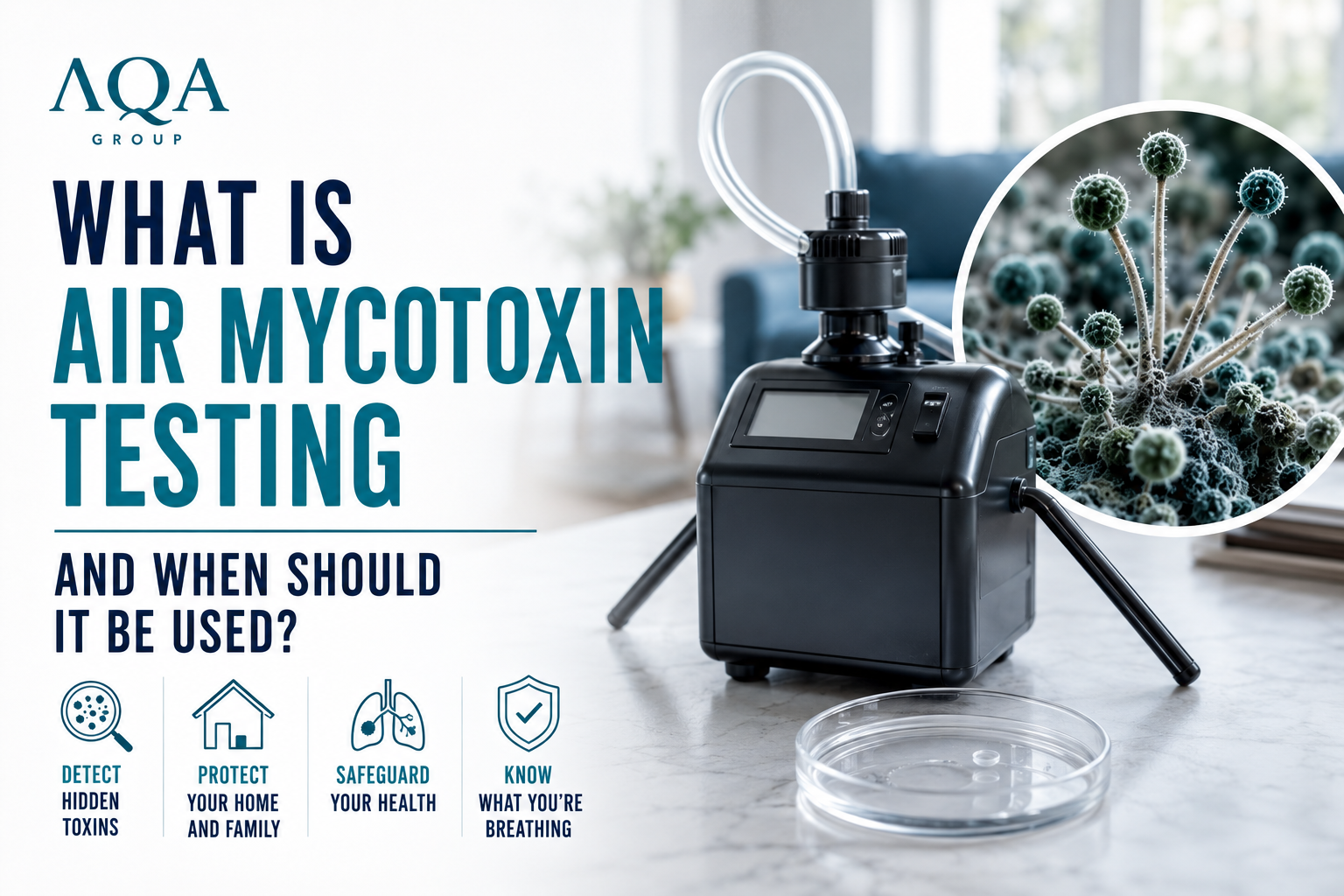
Air mycotoxin testing is a specialised environmental testing method designed to assess airborne contamination associated with fungal by-products. Rather than focusing solely on visible mould growth, the testing evaluates particles that may be present within the indoor air.
One example discussed within the mould investigation industry is AMEA testing, which is designed specifically for air mycotoxin analysis. This type of testing may be considered when investigators require additional information about airborne contamination within a building.
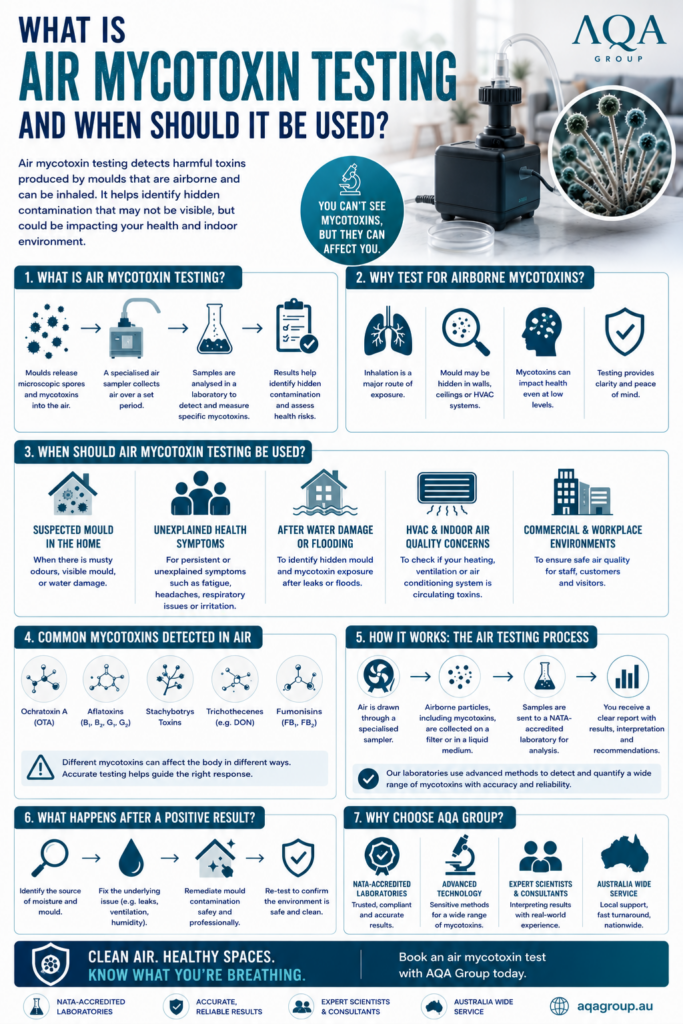
How Does Air Mycotoxin Testing Work?
The process begins by collecting air samples from selected locations within the property. These samples are gathered using specialised equipment designed to capture airborne particles for laboratory analysis.
Once collected, the samples are sent to a laboratory where analytical methods are used to determine whether specific mycotoxins are present. The resulting data is then interpreted alongside other findings from the investigation.
Why Is Laboratory Analysis Necessary?
Mycotoxins cannot be identified through visual observation alone. They are microscopic compounds that require specialised analytical techniques to detect and measure accurately.
Laboratory analysis provides objective data that may assist investigators in understanding environmental conditions within a building. Results are, however, only one component of a broader assessment process.
When Might Air Mycotoxin Testing Be Considered?
Not every mould problem requires air mycotoxin testing. In many of the buildings we assess, visible mould growth and obvious moisture issues provide enough information to begin corrective action without laboratory testing at all.
There are circumstances, however, where additional information may be useful. This is where air testing may become part of a larger environmental investigation.
Can Hidden Mould Trigger Further Investigation?
One of the most common reasons for considering air testing is the suspicion of hidden mould growth. A property may have persistent musty odours, unexplained moisture concerns or recurring contamination without an obvious source.
In these situations, investigators may use air testing as one of several tools to help understand what is occurring within the building. The results can assist in determining whether further investigation may be warranted.
Is Air Testing Useful After Water Damage?
Water damage is one of the leading causes of indoor mould growth. Following flooding, roof leaks or plumbing failures, property owners often want reassurance that conditions have been properly addressed.
Air testing may sometimes be used as part of a post-remediation assessment or follow-up investigation. When interpreted correctly, the results may contribute to a better understanding of the indoor environment following water damage events.
What Information Can Air Mycotoxin Testing Provide?
Air mycotoxin testing is designed to provide information about airborne contamination within a building. This information may help investigators understand environmental conditions that cannot be identified through visual inspection alone.
The value of the testing lies in its ability to contribute data that can be considered alongside moisture findings, building conditions and other investigative observations.
Can Air Testing Confirm a Mould Problem?
Air testing should not be viewed as a standalone diagnostic tool. While it may identify airborne contamination, it does not automatically determine the source of that contamination or explain why it developed.
Professional investigators use air testing as one component of a larger assessment process. Building conditions, moisture sources and visual observations remain critical parts of the investigation.
Can Air Testing Help Guide Remediation Decisions?
In some situations, air testing may contribute information that helps guide remediation strategies. Understanding airborne conditions can assist investigators when evaluating the scope of contamination and determining appropriate next steps.
Remediation decisions should never be based solely on laboratory results, however. Effective remediation requires a thorough understanding of the building, moisture sources and contamination pathways.
What Are the Limitations of Air Mycotoxin Testing?
Like all testing methods, air mycotoxin testing has limitations. Understanding these limitations helps ensure results are interpreted appropriately and prevents unrealistic expectations.
Environmental investigations are most effective when testing is viewed as a tool rather than a solution in itself.
Does Air Testing Reflect Conditions All the Time?
No. Air testing provides a snapshot of conditions at the time the sample is collected. Airborne contamination levels can vary depending on weather conditions, airflow patterns, occupant activity and other environmental factors.
For this reason, results should always be interpreted within the context of the broader investigation. A single sample does not necessarily represent conditions over an extended period.
Can Air Testing Replace a Building Inspection?
No.
A laboratory report cannot identify the source of a leak, determine why moisture is present or explain how contamination developed. These questions require a thorough building assessment conducted by experienced professionals.
Testing supports an investigation, but it does not replace the need for building science expertise and moisture assessment.
Why Is an Evidence-Based Approach Important?
One of the challenges facing homeowners is the amount of conflicting information available regarding mould testing. Some companies recommend extensive testing for every situation, while others dismiss testing entirely.
The reality is that testing has value when used appropriately. The key is selecting the right testing method for the specific circumstances of the property.
Can Too Much Testing Be a Problem?
Yes.
Collecting large numbers of samples without a clear purpose can increase costs while providing little practical value. Every test should have a specific objective and contribute to answering a meaningful question about the building.
An evidence-based investigation focuses on solving problems rather than simply generating laboratory reports.
How Do Professionals Determine Whether Testing Is Appropriate?
Experienced investigators begin by assessing the property itself. Moisture history, visible damage, building design and occupant concerns all help determine whether testing may be beneficial.
Only after understanding the building do they decide which investigative tools are likely to provide meaningful information. In our experience, this approach consistently leads to better outcomes than beginning with a fixed testing package regardless of what the property actually shows.
How Can Air Quality Australia Help?
Choosing the right testing strategy can be challenging, particularly when dealing with hidden mould, water damage or indoor environmental quality concerns. Professional guidance can help ensure investigations focus on the underlying cause of the problem rather than symptoms alone.
Air Quality Australia provides professional inspections, moisture assessments and environmental testing services designed to support evidence-based decision-making. Our goal is to help property owners understand their buildings and identify practical solutions.
When Should You Contact a Professional?
If you are experiencing recurring mould growth, persistent musty odours, unexplained indoor air quality concerns or ongoing moisture issues, it may be worth seeking professional advice.
Early investigation often helps identify problems before they become more extensive and costly to address. Understanding the condition of your property is often the first step towards finding an effective solution.
What Should You Read Next?
Now that you understand how air mycotoxin testing works, the next step is learning about surface testing and how MESA testing may be used to investigate contamination on building materials and household surfaces.
Continue reading: What Is Surface Mycotoxin Testing and What Can It Tell You?