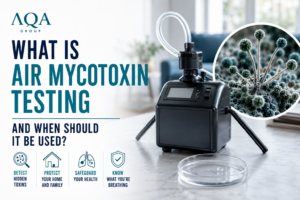

Have You Started Hearing About AMEA Testing During a Mould Investigation?
For many families, mould investigations begin with a simple question. Why does the home smell musty? In other situations, the process starts after a water leak, flooding or a recurring mould problem. As homeowners begin researching possible causes, they often find themselves exposed to a completely new vocabulary.
It usually starts with mould, then progresses to terms such as mycotoxins, air sampling, surface sampling and dust testing. Before long, people begin hearing about methods such as ELISA, MESA and AMEA. For someone already trying to understand what is happening within their home, the terminology can quickly become overwhelming.
One of the testing methods discussed during the Respirare Labs podcast interview was AMEA testing. While the name sounds highly technical, the reason it attracted attention within the mould industry is relatively straightforward. It was developed to help investigators gather information about airborne mycotoxins within indoor environments.
If you are concerned about mould contamination, indoor air quality or possible mycotoxin exposure, Air Quality Australia can help determine the most appropriate investigation strategy for your property. Understanding the purpose behind different testing methods can make the process much easier to navigate.
Why Do Homeowners Start Looking Beyond Visible Mould?
Many people assume mould problems should be easy to identify. They expect visible growth on walls, ceilings or furnishings. In practice, contamination does not always present itself so clearly.
Some properties have strong musty odours but very little visible mould. Others have a history of water damage, recurring moisture issues or indoor air quality concerns without obvious contamination. In these situations, investigators often need additional tools to build a clearer picture of what may be occurring within the building.
Why Has Air Quality Become Such a Focus?
People spend a large proportion of their time indoors. As awareness of indoor environmental quality has grown, more homeowners have become interested in understanding what may be present within the air they breathe each day.
This growing interest has led to increased discussion around airborne contaminants, mould fragments, spores and mycotoxins. As a result, testing methods designed to examine airborne conditions have attracted greater attention within the industry.
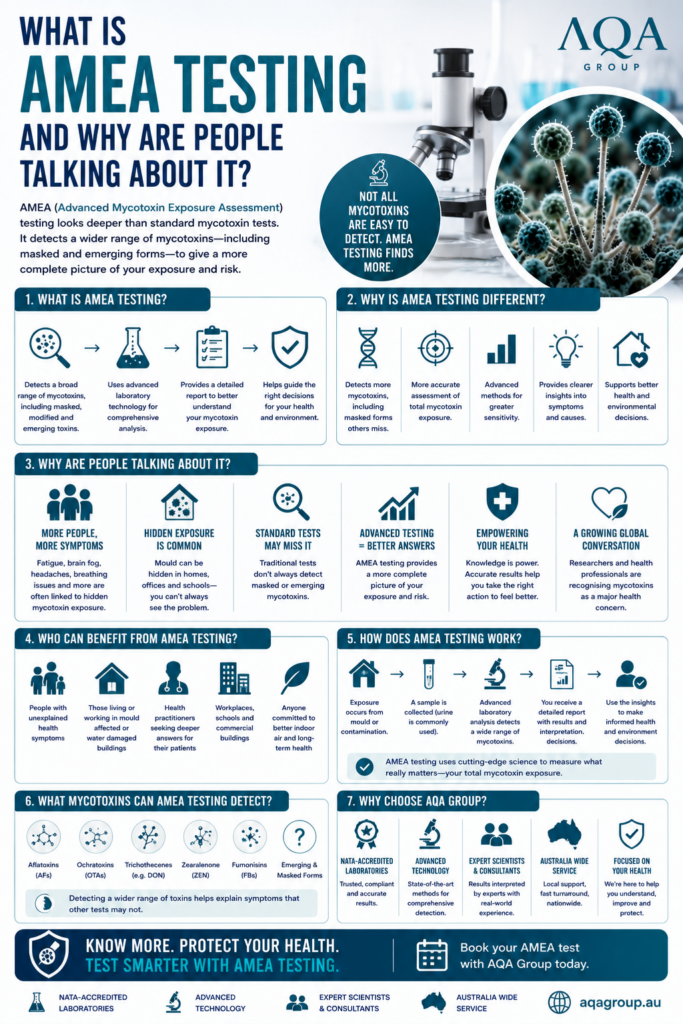
What Is AMEA Testing?
AMEA stands for Air Mycotoxin Environmental Analysis. As the name suggests, it is a testing method designed to evaluate airborne mycotoxins within indoor environments.
Unlike surface testing, which focuses on contamination that has settled onto materials and furnishings, AMEA testing examines what may be present in the air at the time the sample is collected. This provides investigators with a different type of information that may contribute to a broader environmental assessment.
Why Was AMEA Developed?
Like many testing methods, AMEA was developed because investigators are constantly looking for ways to better understand contamination within buildings.
Traditional inspection techniques remain foundational to most mould investigations. Moisture assessments, visual inspections and building evaluations continue to form the basis of effective environmental assessment. There are situations, however, where additional information may help investigators better understand conditions within a property. AMEA was developed as one of the tools that may assist in providing that information.
Is AMEA Designed to Replace Traditional Investigations?
No.
One of the most important things experienced investigators understand is that testing should support an investigation rather than replace it. A laboratory result cannot identify the source of a roof leak, determine why moisture is present inside a wall cavity or explain how contamination developed.
AMEA testing is one investigative tool. Its value comes from how the results are interpreted alongside moisture findings, building assessments and other observations gathered during the investigation.
How Does AMEA Testing Work?
Most homeowners are not particularly interested in laboratory procedures. What they want to know is what the testing is trying to achieve and how the information may be used.
The process begins by collecting air samples from selected locations within the property. These samples are then analysed by a laboratory using specialised analytical methods designed to identify specific mycotoxins.
Why Sample the Air?
When people occupy a building, they interact with the indoor air environment constantly. If contamination is present within the air, understanding those conditions may contribute to a broader understanding of the property.
Air sampling allows investigators to examine what may be moving through occupied spaces at the time of testing. This information may then be compared with other findings gathered during the investigation.
What Happens After Samples Are Collected?
Once samples have been collected, they are submitted for laboratory analysis. The laboratory evaluates the samples and reports the findings back to the investigator.
At that point, interpretation becomes critical. Results are not viewed in isolation. Instead, they are considered alongside moisture readings, building history, visual observations and any other relevant information obtained during the assessment.
Why Did Investigators Become Interested in AMEA Testing?
Over the years, mould investigators have relied on many different tools to better understand environmental contamination. Moisture meters, thermal imaging cameras, air sampling equipment and dust analysis have all become valuable parts of the investigative process.
AMEA attracted attention because it focuses specifically on airborne mycotoxins — an area that many homeowners and investigators want to understand more clearly.
What Questions Is AMEA Trying to Answer?
One of the primary questions investigators often face is whether contamination may be affecting indoor air within occupied areas of a building.
A property may have a history of water damage. There may be evidence of hidden mould growth. Occupants may report concerns about indoor environmental quality. In situations like these, investigators sometimes seek additional information about airborne conditions within the property. AMEA testing may contribute information that helps answer some of those questions.
Why Isn’t Visual Inspection Always Enough?
Visual inspections remain one of the most important parts of any mould investigation. However, they have real limitations.
Contamination can develop within concealed areas such as wall cavities, roof spaces and subfloors. It’s not uncommon for us to find properties where visible evidence is limited despite clear moisture-related problems elsewhere in the building. This is why investigators sometimes draw on additional tools to gather more complete information.
When Might AMEA Testing Be Useful?
Not every mould investigation requires AMEA testing. Many contamination issues can be identified through moisture assessments, building inspections and visual observations alone.
There are situations, however, where investigators may decide that additional information could be beneficial.
Can AMEA Be Useful During Hidden Mould Investigations?
Potentially.
Properties with unexplained odours, recurring moisture problems or evidence of previous water damage sometimes present real challenges for investigators. In these situations, additional testing may contribute useful information that helps guide the investigation.
The decision to perform testing should always be based on the objectives of the assessment rather than a desire to collect laboratory reports.
Is AMEA Used After Water Damage Events?
Water damage is one of the leading causes of mould contamination within buildings. Following significant water intrusion events, property owners often want reassurance that conditions have been properly addressed.
Depending on the circumstances, investigators may consider air testing as part of a broader evaluation of the property. The results may help contribute to a better understanding of indoor environmental conditions following remediation or repair work.
What Are the Advantages of AMEA Testing?
Every testing method has strengths and limitations. Understanding both is important for determining whether a particular approach may be appropriate.
AMEA has attracted interest because it provides information about airborne conditions rather than focusing solely on surfaces or building materials.
Does AMEA Focus on Occupied Spaces?
One of the reasons investigators may find air testing useful is because it examines conditions within the indoor environment that occupants actually experience.
Rather than focusing exclusively on contamination attached to a specific surface, air testing may help provide information about airborne conditions throughout the property.
Can AMEA Support Broader Investigations?
Yes.
The most useful investigations combine multiple sources of information. Moisture readings, building assessments, visual observations and laboratory testing can all contribute to understanding what is occurring within a property.
AMEA testing is most valuable when viewed as one component of this larger investigative process.
What Are the Limitations of AMEA Testing?
Like every testing method, AMEA has limitations. Understanding these helps ensure realistic expectations and appropriate interpretation of results.
No laboratory test can provide all the answers about a building or environmental contamination issue.
Does AMEA Represent Conditions All the Time?
No.
Air testing provides a snapshot of conditions at the time the sample is collected. Environmental conditions can change depending on airflow, weather, occupant activity and other factors.
For this reason, results should always be considered alongside the broader findings of the investigation rather than viewed as a complete representation of all conditions within the property.
Can AMEA Identify the Source of a Moisture Problem?
No.
Laboratory testing can provide information about environmental conditions, but it cannot identify a leaking roof, plumbing failure or building defect. Determining the source of moisture remains one of the most important parts of any mould investigation and requires a thorough assessment of the property.
How Can Air Quality Australia Help?
Understanding mould contamination requires more than a single test result. Identifying moisture sources, evaluating building conditions and selecting appropriate investigative tools all contribute to developing an accurate understanding of a property.
Air Quality Australia provides professional inspections, moisture assessments and evidence-based environmental investigations. Graham Singleton and Jason Chapple draw on decades of practical experience to help property owners understand what is happening within their buildings and identify practical solutions.
When Should You Contact a Professional?
If you are dealing with recurring mould growth, unexplained musty odours, water damage or concerns about indoor air quality, professional advice may help clarify the situation and determine whether further investigation is required.
The earlier moisture issues are identified, the easier they are often to address.
What Should You Read Next?
Now that you understand what AMEA testing is and why investigators may use it, the next step is learning about MESA testing and how surface mycotoxin analysis can provide a different perspective during a mould investigation.
Continue reading: What Is ELISA Testing and Why Are People Talking About It?