
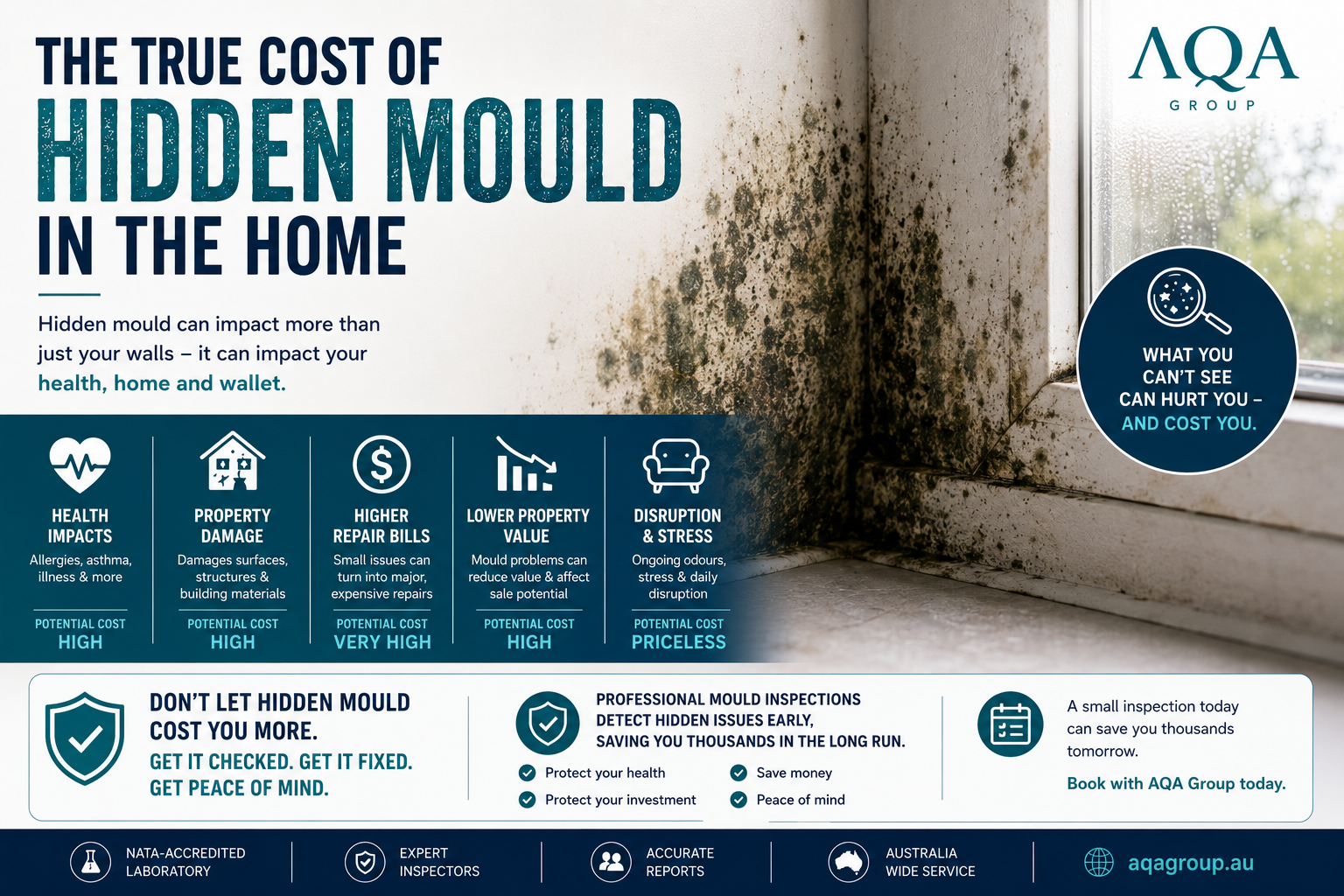
Could a Small Moisture Problem Become a Major Expense?
Many homeowners think of mould as a maintenance issue. A stain appears on a ceiling, a patch develops behind furniture or mould starts growing around a window frame. At first glance, the problem may seem relatively minor.
Mould often tells a much larger story. Visible contamination is frequently the symptom of an underlying moisture problem that has been developing for months or even years. By the time mould becomes obvious, the hidden costs may already be accumulating behind walls, beneath flooring or within roof cavities.
If you are dealing with mould growth, water damage or indoor air quality concerns, Air Quality Australia can help identify problems before they become larger and more expensive to resolve. Early investigation is often one of the most effective ways to minimise both the financial and practical impact.
Why Do Hidden Mould Problems Often Go Undetected?
One of the reasons mould can become so expensive is that it frequently develops out of sight. Slow plumbing leaks, roof defects, failed waterproofing systems and poor ventilation can all allow moisture to accumulate within concealed areas of a building.
Because these problems often develop gradually, homeowners may not recognise the warning signs until contamination has become widespread. By that stage, repairs are usually more complex and costs can increase considerably.
Why Is Early Detection So Important?
The earlier a moisture problem is identified, the easier it generally is to resolve. A small leak repaired quickly may require little more than minor maintenance. The same leak left untreated for several years may result in damaged building materials, mould contamination and extensive remediation work.
Early detection allows homeowners to address the source of the problem before contamination spreads throughout the property. This often means lower costs, less disruption and a faster path towards resolution.
How Can Hidden Mould Affect a Property?
Mould contamination is often associated with visible growth, but the real impact frequently occurs beneath the surface. Moisture can affect structural materials, insulation, flooring systems and other building components long before visible mould appears.
Contamination may continue developing even while the property appears relatively normal to the occupants.

Can Water Damage Affect Building Materials?
Yes.
Many common building materials absorb moisture readily. Plasterboard, timber framing, insulation, carpet underlay and flooring systems can all be affected when exposed to water over extended periods.
As moisture accumulates, materials may deteriorate, lose structural integrity or create favourable conditions for mould growth. The longer these conditions remain unresolved, the greater the likelihood that repairs will be required.
Can Small Leaks Create Large Problems?
One of the most common misconceptions is that significant contamination requires significant water damage. In reality, even minor leaks can create substantial problems when they go unnoticed for long periods.
A slow plumbing leak hidden inside a wall cavity may release only a small amount of water each day. Over months or years, however, that moisture can create ideal conditions for mould growth and material deterioration. We regularly inspect properties where leaks of this kind have gone undetected for years, and the damage found behind walls is far more extensive than anyone anticipated. By the time the issue comes to light, substantial repairs are often necessary.
What Financial Costs Can Homeowners Face?
The financial impact of hidden mould extends well beyond cleaning visible contamination. In many situations, the greatest expenses come from addressing the underlying moisture problem and repairing damaged building materials.
The total cost often depends on how long the issue has been present and how far contamination has spread throughout the property.
Can Remediation Become Expensive?
Professional mould remediation may involve the removal of contaminated materials, specialised cleaning procedures, moisture management and post-remediation verification. The scope of work varies depending on the severity of the contamination.
When contamination is discovered early, remediation may be relatively straightforward. Widespread contamination affecting multiple areas of a property can require more extensive intervention and considerably higher costs.
What About Repair Costs?
Addressing contamination often involves repairing the conditions that allowed the problem to develop in the first place. Roof repairs, plumbing repairs, waterproofing work and ventilation improvements may all be necessary depending on the moisture source.
In some situations, damaged building materials may also need to be removed and replaced. These additional repairs can add considerably to the overall cost of resolving a mould problem.
Can Mould Create Ongoing Expenses?
One of the most frustrating aspects of hidden mould is that costs often continue accumulating until the moisture source is identified and corrected.
Many homeowners spend money repeatedly cleaning mould or repairing cosmetic damage without addressing the underlying cause. As a result, contamination returns and additional expenses keep building.
Why Do Some Mould Problems Keep Returning?
Mould requires moisture to survive. If the moisture source remains present, mould is likely to return regardless of how often affected areas are cleaned.
This is why effective investigations focus on identifying moisture sources rather than simply removing visible contamination. Solving the root cause of the problem is the only reliable way to prevent recurring expenses.
Can Multiple Inspections Increase Costs?
Unfortunately, some homeowners go through a cycle of repeated inspections, testing and remediation attempts before the underlying issue is properly identified.
This highlights the importance of selecting qualified professionals and ensuring investigations focus on moisture sources, building conditions and contamination pathways rather than isolated symptoms.
What Are the Emotional Costs of Hidden Mould?
While financial costs are often discussed, the emotional impact of mould contamination is frequently overlooked. Dealing with an unresolved mould problem can be stressful, frustrating and exhausting for homeowners.
The uncertainty surrounding contamination, repairs and future costs often creates real anxiety — particularly when problems persist despite repeated attempts to address them.
Why Can Mould Problems Become So Stressful?
Many homeowners feel overwhelmed when they discover contamination within their property. Questions about repairs, testing, remediation and potential building damage can quickly become difficult to navigate.
The situation becomes even more difficult when conflicting advice arrives from different contractors, or when contamination continues returning despite previous remediation efforts.
How Can Uncertainty Affect Decision-Making?
Uncertainty often leads homeowners to make decisions based on fear rather than evidence. This can result in unnecessary testing, expensive remediation recommendations or repairs that fail to address the true source of the problem.
An evidence-based investigation helps reduce that uncertainty by providing a clearer understanding of the building and the factors contributing to contamination.
What Lessons Can Homeowners Learn From Real-World Experiences?
Many people only become familiar with mould contamination after experiencing a problem themselves. By that point, significant costs and disruption may already have occurred.
A recurring theme within the mould industry is the homeowner who spent considerable time and money seeking answers before the source of contamination was finally identified. In our experience, those situations are far more common than they should be — and most could have been avoided with a thorough investigation from the outset.
Why Is Professional Advice So Valuable?
An experienced investigator brings building science knowledge, moisture assessment skills and practical experience to the process.
Rather than focusing on isolated symptoms, they evaluate the building as a whole. This broader perspective often helps identify problems more efficiently and reduces the risk of costly mistakes.
Can Education Help Prevent Future Problems?
Yes.
Understanding how moisture enters buildings, recognising early warning signs and responding promptly to water damage can greatly reduce the likelihood of major contamination events.
Homeowners who understand the relationship between moisture and mould are generally better equipped to identify potential issues before they become serious.
How Can Homeowners Reduce the Risk of Hidden Mould?
While no building is completely immune to moisture problems, proactive maintenance can reduce the likelihood of mould contamination developing.
Routine inspections, prompt repairs and good moisture management practices remain among the most effective preventative measures available.
What Maintenance Practices Make the Biggest Difference?
Regular roof inspections, plumbing maintenance and prompt attention to water damage can prevent many mould problems before they begin.
Ensuring adequate ventilation — particularly in bathrooms, laundries and kitchens — also helps reduce humidity levels and minimise the conditions that support mould growth.
When Should Moisture Problems Be Investigated?
Any recurring moisture issue should be taken seriously. Water stains, musty odours, condensation problems and recurring mould growth may all indicate underlying conditions that warrant further investigation.
Addressing these warning signs early often prevents contamination from becoming more extensive and costly to resolve.
How Can Air Quality Australia Help?
Hidden mould problems rarely improve on their own. The key to resolving contamination is understanding why it developed and identifying the moisture source responsible.
Air Quality Australia provides professional inspections, moisture assessments and evidence-based investigations designed to identify contamination pathways and recommend practical solutions. Our goal is to help homeowners make informed decisions based on facts rather than assumptions.
When Should You Contact a Professional?
If you are experiencing recurring mould growth, unexplained musty odours, water damage or concerns about hidden contamination, professional advice may help identify the problem before it becomes more costly.
Early investigation is often the most effective way to minimise disruption, reduce expenses and protect the long-term condition of your property.
What Should You Read Next?
Now that you understand the financial and practical costs associated with hidden mould, the next step is learning how to recognise predatory testing practices and avoid spending thousands of dollars on unnecessary investigations.
Continue reading: Avoiding Mould Testing Scams and Overpriced Services