
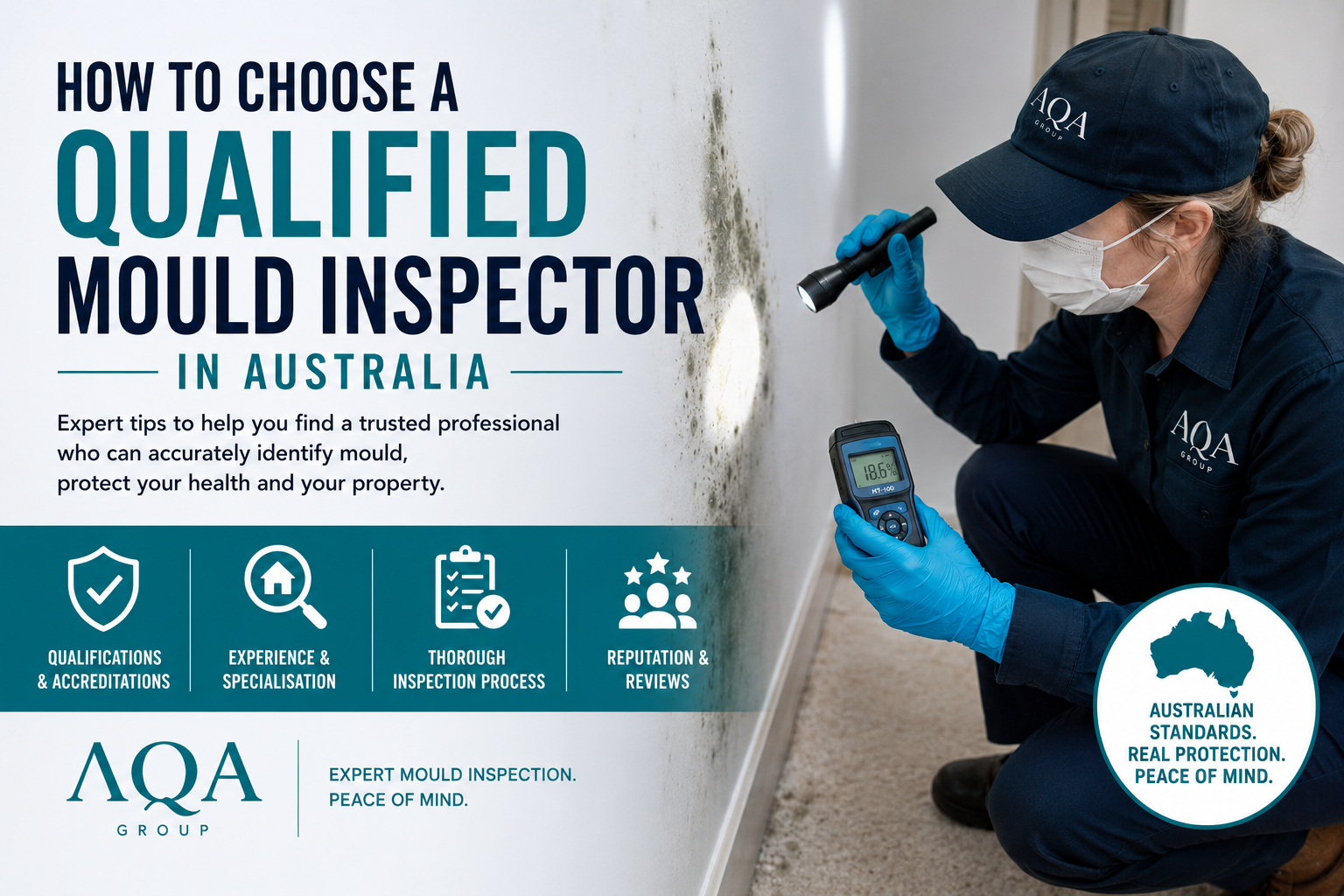
Are All Mould Inspectors Equally Qualified?
Not all mould inspectors have the same level of training, experience or expertise. For homeowners, this can create real confusion. A quick online search may reveal dozens of companies offering inspections, testing services and remediation advice — all claiming to provide the best solution.
The mould industry is not tightly regulated, and standards can vary considerably. Testing methods differ, investigation approaches differ and recommendations may not always reflect the actual conditions within a property. Choosing a qualified and experienced professional is often one of the most consequential decisions a homeowner can make.
If you are dealing with mould growth, water damage or indoor air quality concerns, Air Quality Australia provides evidence-based assessments designed to identify the source of contamination rather than simply treating the symptoms.
Why Does Choosing the Right Inspector Matter?
A mould problem rarely exists on its own. In most cases, mould is the result of an underlying moisture issue. If that moisture source is not identified and addressed, contamination is likely to return regardless of how much testing or remediation is performed.
A qualified inspector focuses on understanding the building as a whole. They investigate how water entered the property, where moisture may be accumulating and what conditions are allowing contamination to develop. This approach helps ensure that recommendations address the root cause of the problem rather than simply the visible symptoms.
Can the Wrong Advice Become Expensive?
Yes.
Many homeowners spend thousands of dollars addressing mould problems that later return because the underlying moisture issue was never identified. In some cases, multiple inspections, unnecessary testing and repeated remediation efforts occur before the real source of the problem is found.
Choosing an experienced professional from the beginning often saves both time and money. A thorough investigation can help prevent costly mistakes and reduce the likelihood of recurring contamination.
What Should a Mould Inspector Actually Do?
Many people assume a mould inspection involves little more than identifying visible mould. In reality, a professional investigation should go considerably further.
A qualified inspector should assess the building, evaluate moisture conditions, investigate potential sources of water intrusion and consider the property’s history. Testing may be recommended in certain situations, but it should support the investigation rather than become the investigation itself. From our perspective, the most valuable part of an inspection is rarely the test results — it’s the building assessment that comes before them.
Is Finding Mould the Same as Finding the Problem?
Not necessarily.
Visible mould is often the most straightforward part of the investigation. The more important question is why the mould developed in the first place. In many properties we inspect, the contamination is easy to see — the moisture source is the harder question to answer. Without understanding where moisture is coming from, identifying contamination does little to resolve the underlying issue.
Experienced investigators focus on causation, not just symptoms. Their goal is to determine how moisture entered the building, how long it may have been present and what conditions allowed contamination to develop.
Why Is Building Knowledge Important?
Mould investigations are closely tied to building science. Understanding how buildings are constructed, how moisture moves through structures and how ventilation affects indoor environments can provide critical insights during an assessment.
An inspector who understands both contamination and building performance is better equipped to identify hidden issues that may be contributing to mould growth. This broader perspective frequently leads to more accurate findings and more practical recommendations.
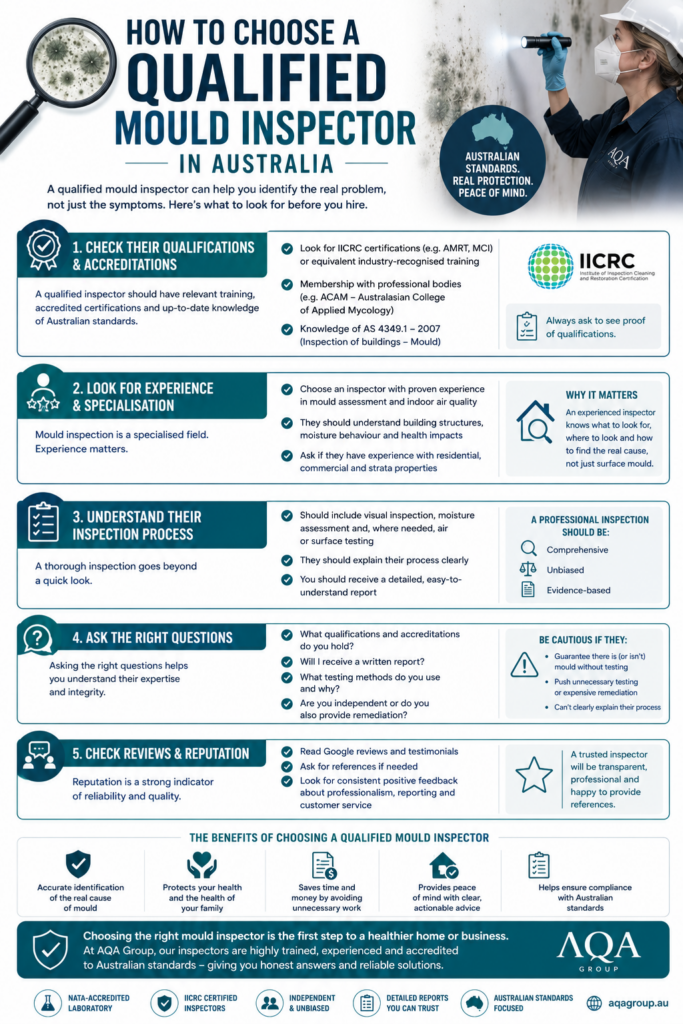
What Qualifications Should You Look For?
Mould investigation can involve people from a wide range of backgrounds. Environmental consultants, building inspectors, industrial hygienists and indoor environmental professionals may all work within the field.
Because backgrounds vary considerably, homeowners should focus on experience, training and investigative methodology rather than simply looking for a particular title or credential.
Does Industry Experience Matter?
Experience is often one of the most valuable things an inspector can bring to an investigation. Professionals who have worked through hundreds of moisture and mould issues have usually encountered a wide variety of building types, contamination scenarios and underlying causes.
That practical knowledge is difficult to replace. Experienced investigators are generally better at recognising patterns, identifying hidden issues and avoiding common mistakes that less experienced operators might miss.
Should Inspectors Understand Testing Methods?
Yes.
Even when testing is not required, inspectors should understand the strengths and limitations of different testing approaches. Air testing, surface testing and dust testing each provide different types of information and should only be recommended when they serve a clear purpose.
A professional who understands environmental testing can explain why a particular test is being recommended, what information it is likely to provide and how the results will be interpreted.
What Questions Should You Ask Before Hiring an Inspector?
Homeowners often focus on cost when comparing inspection services. While budget matters, the cheapest inspection is not always the best value.
Asking a few straightforward questions before hiring an inspector can reveal how they approach investigations and whether their methodology suits your situation.
Do They Focus on Moisture Sources?
One of the first questions worth asking is how the inspector identifies moisture sources. Because mould requires moisture to grow, understanding how water entered the building should be a central focus of any investigation.
If the discussion centres entirely on testing without addressing moisture, that is worth noting. Effective investigations begin with the building, not the laboratory.
Will They Explain Their Findings Clearly?
A good inspector should be able to explain technical information in a way that homeowners can understand. Environmental investigations often involve moisture readings, testing results and building assessments that may be unfamiliar to most property owners.
Clear communication matters because homeowners need to understand both the problem and the recommended solution. A confusing report tends to create more questions than it answers.
How Can Homeowners Avoid Predatory Testing Practices?
One concern discussed within the mould industry is the presence of companies that rely on fear-based marketing. Homeowners who are already worried about contamination may be encouraged to purchase extensive testing packages without a clear explanation of why the testing is necessary.
This can result in significant costs without providing meaningful answers about the condition of the property.
Is More Testing Always Better?
No.
A common misconception is that more testing automatically leads to a better investigation. In reality, unnecessary testing increases costs while contributing very little useful information.
Every test should have a clear purpose. If an investigator cannot explain why a sample is being collected or how the results will influence the assessment, it is reasonable to ask additional questions before proceeding.
What Are Signs of an Evidence-Based Approach?
Evidence-based investigators focus on facts rather than fear. They assess the building, evaluate moisture conditions and recommend testing only when it serves a clear purpose.
Rather than leading with laboratory reports, they focus on understanding the source of contamination and identifying practical solutions. This approach generally produces more useful outcomes than investigations driven primarily by testing volume.
Why Is Independent Advice Important?
In some situations, the same company may offer inspections, testing and remediation services. While this does not automatically create a conflict of interest, homeowners should understand how recommendations are being developed.
Independent assessments can provide an objective picture of the property’s condition before major remediation decisions are made.
Should Investigations and Remediation Be Separate?
Many professionals in this field see clear advantages in separating assessment from remediation. An independent investigation can establish the extent of contamination and identify the moisture source before remediation plans are developed.
This approach helps ensure recommendations reflect the condition of the building rather than the services a company happens to offer.
Why Is Objectivity So Valuable?
Mould investigations often involve substantial financial decisions. Homeowners may be considering repairs, remediation work or further testing — sometimes all three at once.
Objective advice allows those decisions to be based on evidence rather than assumptions. This can reduce unnecessary costs and improve confidence in the path forward.
What Role Does Education Play in a Successful Investigation?
A recurring theme within the mould industry is the need for better education. Many homeowners are unfamiliar with moisture management, building science and environmental contamination until they encounter a problem firsthand.
A good investigator helps bridge that knowledge gap by explaining not only what was found, but why it happened and how similar issues can be avoided in future.
Should Homeowners Understand the Process?
Yes.
The more homeowners understand about moisture, mould growth and building performance, the better equipped they are to make informed decisions. Education also tends to reduce unnecessary anxiety and helps people focus on practical solutions rather than worst-case scenarios.
An investigation should leave homeowners feeling informed rather than confused or overwhelmed.
Can Better Education Prevent Future Problems?
In many cases, yes.
Understanding the warning signs of moisture intrusion, recognising early indicators of contamination and responding promptly to water damage can make serious mould issues far less likely to develop. In our experience, homeowners who understand how moisture behaves in a building are far less likely to encounter the same problem twice.
Education is often one of the most valuable outcomes of a professional investigation.
How Can Air Quality Australia Help?
Choosing the right mould inspector can be challenging, particularly when dealing with water damage, recurring contamination or concerns about hidden moisture problems. The quality of the investigation often determines the quality of the solution.
Air Quality Australia provides professional inspections, moisture assessments and evidence-based investigations designed to identify the source of contamination and recommend practical, long-term solutions. Our focus is on understanding the building, not simply generating laboratory reports.
When Should You Contact a Professional?
If you are dealing with recurring mould growth, unexplained musty odours, water damage or concerns about hidden contamination, seeking professional advice early may help prevent more extensive problems from developing.
A thorough investigation often saves time, reduces unnecessary expenses and provides a clearer path towards resolving the issue.
What Should You Read Next?
Now that you understand how to choose a qualified mould inspector, the next step is examining the broader impact mould contamination can have on homeowners, including the financial, emotional and practical challenges that often accompany hidden moisture problems.
Continue reading: The True Cost of Hidden Mould in the Home