Could Some Mycotoxins Be More Difficult to Detect Than Expected?
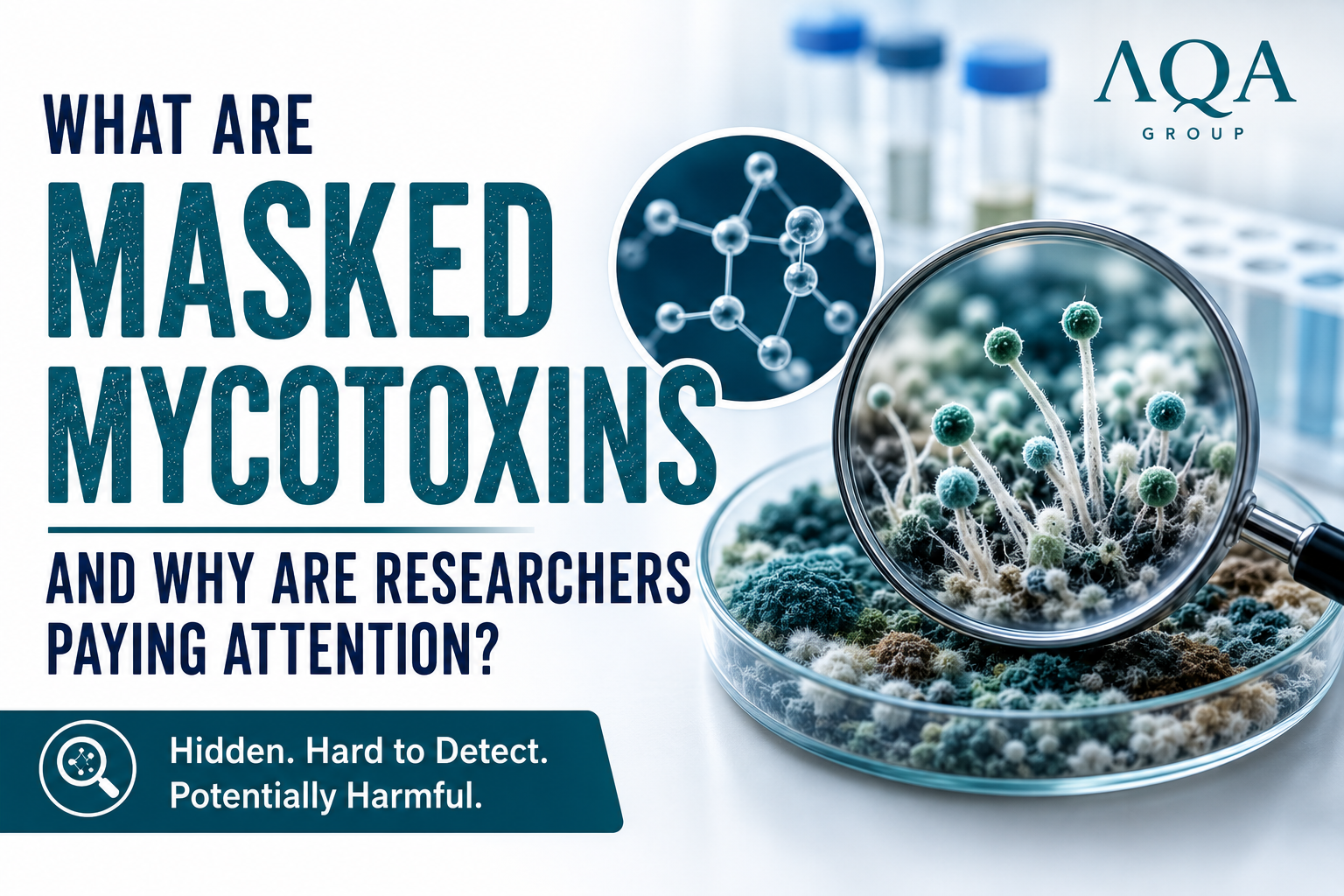
Most homeowners have never heard the term “masked mycotoxins”. Even within the environmental industry, it receives far less attention than mould, moisture or traditional mycotoxin testing. As scientific research continues to evolve, however, masked mycotoxins are attracting increasing interest among researchers and laboratory professionals.
The reason is relatively straightforward. Scientists have discovered that some mycotoxins may exist in forms that are more difficult to identify using certain testing methods. While research in this area is still developing, the concept has raised important questions about how contamination is measured, interpreted and understood.
If you are concerned about mould contamination, indoor air quality or potential mycotoxin exposure, Air Quality Australia can help determine the most appropriate investigation strategy for your property. Understanding the capabilities and limitations of environmental testing is an important part of making informed decisions.
Why Are Masked Mycotoxins Receiving More Attention?
Advances in laboratory science have allowed researchers to examine contamination in greater detail than was previously possible. As analytical methods improve, scientists continue to learn more about how mycotoxins behave in different environments and how they interact with other compounds.
This growing body of research has highlighted the possibility that some mycotoxins may be altered, bound or transformed in ways that make them harder to identify during routine analysis. This does not mean traditional testing is ineffective — it demonstrates that environmental science remains an evolving field with new discoveries continuing to emerge.
Why Should Homeowners Understand This Topic?
For most homeowners, the finer details of laboratory science are not the priority. What matters is understanding that environmental investigations are rarely straightforward. Testing can provide valuable information, but no testing method can answer every question about a building.
Masked mycotoxins are a useful reminder that environmental assessments should always be viewed within a broader context. Building history, moisture conditions, contamination pathways and professional interpretation remain just as important as laboratory results when evaluating a property.
What Are Masked Mycotoxins?
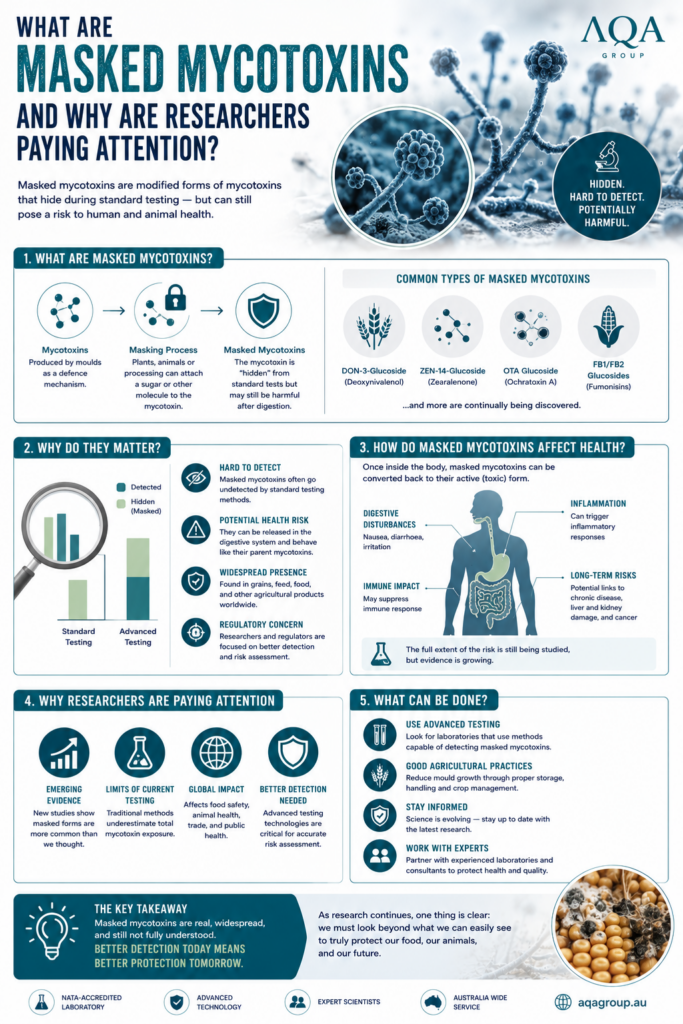
The term “masked mycotoxins” generally refers to mycotoxins that have undergone some form of transformation or interaction that makes them harder to detect using certain analytical methods. Rather than existing in their original chemical form, they may be altered or attached to other compounds.
Researchers first began exploring this concept through agricultural and food safety studies. Over time, the discussion expanded into other fields where mycotoxins are studied, including environmental science and contamination assessment.
Why Are They Called “Masked” Mycotoxins?
The term “masked” does not mean the mycotoxin disappears. It refers to the idea that the compound may be hidden from certain testing methods because it is no longer present in the form that conventional analysis is designed to identify.
A useful analogy is a person wearing a disguise. The individual is still present, but may not be immediately recognised. Similarly, a masked mycotoxin may still exist within a sample, but its altered form can make identification more challenging depending on the analytical method being used.
Does This Mean Traditional Testing Is Wrong?
No.
One of the biggest misconceptions surrounding masked mycotoxins is the assumption that their existence somehow invalidates established testing methods. This is not the case. Traditional testing remains an important and valuable tool for environmental investigations.
The discussion around masked mycotoxins reflects the normal process of scientific discovery — the continued refinement of laboratory techniques as researchers learn more about contamination and environmental chemistry. It is not evidence that existing methods are flawed.
Why Do Researchers Study Masked Mycotoxins?
Scientific research is often driven by questions rather than answers. When researchers encounter unexpected results or identify patterns that existing knowledge cannot fully explain, further investigation follows.
Masked mycotoxins have attracted attention because they raise questions about how contamination behaves over time and how laboratory methods identify specific compounds within complex environmental samples.
Could Masked Mycotoxins Affect Laboratory Results?
Researchers continue to investigate how masked mycotoxins interact with different testing methods. In some situations, the presence of altered compounds may influence how results are interpreted.
This does not make testing unreliable. It highlights the importance of understanding the strengths and limitations of different analytical methods. Scientific interpretation always involves recognising both what a test can reveal and where its limitations lie.
Why Is Research Still Ongoing?
Environmental science continues to evolve. New technologies, improved analytical techniques and expanding scientific knowledge all contribute to a better understanding of contamination and environmental health.
Because masked mycotoxins remain an active area of research, scientists are continuing to explore how these compounds form, how they behave and how they might be identified more effectively in different environments.
What Does This Mean for Environmental Testing?
Homeowners who encounter technical information about masked mycotoxins online sometimes conclude that current testing methods are inadequate. That concern is understandable, but it is rarely an accurate reflection of the situation.
Environmental investigations remain focused on understanding the overall condition of a property. Testing is one tool among many that investigators use when assessing mould contamination and moisture-related issues. No single laboratory result tells the complete story.
Should Homeowners Be Concerned About Masked Mycotoxins?
The same fundamentals apply to all mould investigations. Moisture control, building maintenance and prompt response to water damage remain the most important factors in preventing mould-related problems.
While masked mycotoxins are scientifically interesting, they do not change the basic principles of contamination prevention. Without moisture, mould cannot continue to grow. Addressing moisture problems remains the foundation of effective mould management.
Do Masked Mycotoxins Change How Buildings Are Investigated?
In most cases, no.
In our experience, masked mycotoxins rarely change the fundamental approach to a property investigation. Assessments still begin with the building itself — moisture sources, water damage, visible contamination and environmental conditions remain the primary focus. Laboratory testing supports the investigation but does not replace building assessments or moisture evaluations.
Ongoing research simply reinforces the importance of using multiple sources of information when evaluating environmental conditions.
Why Is Professional Interpretation More Important Than Ever?
Homeowners frequently come to us having read technical information online about mould spores, mycotoxins, airborne contamination and masked mycotoxins. Without proper context, terms like these can quickly become overwhelming.
Professional investigators help bridge the gap between laboratory science and practical decision-making. Their role is not simply to collect samples but to interpret information in a way that is meaningful and relevant to the property being assessed.
Can Technical Information Be Misleading?
Yes.
Scientific terminology can sound more alarming than the underlying situation warrants. Without understanding the broader context, homeowners may assume that every new discovery represents a serious threat or indicates a fundamental problem with existing testing methods.
In reality, scientific progress is a normal part of environmental research. New information helps improve understanding, refine techniques and support better decisions. It should not automatically be read as evidence that previous knowledge was wrong.
Why Is Context So Important?
Laboratory results, research findings and technical discussions all have value. However, they must be interpreted against the context of the building being investigated.
A property’s history, moisture conditions, remediation history and environmental characteristics often provide more practical insight than any single laboratory result. Looking at the full picture is generally the most effective way to understand contamination concerns.
What Should Homeowners Focus On Instead?
While discussions about masked mycotoxins continue within scientific circles, homeowners should remain focused on the issues that have the greatest practical impact on their property.
Water intrusion, poor ventilation, hidden leaks and delayed remediation remain among the most common causes of mould contamination in Australian homes. Addressing these issues early is far more practical than becoming preoccupied with complex laboratory terminology.
How Can Moisture Problems Be Prevented?
Routine maintenance is one of the most effective ways to reduce the risk of mould growth. Roof inspections, plumbing maintenance and prompt repair of water damage can prevent many contamination issues before they develop.
Monitoring humidity levels and ensuring adequate ventilation also play important roles in maintaining a healthy indoor environment. Small moisture problems are generally much easier and less expensive to address than widespread contamination.
When Should Professional Advice Be Sought?
If mould growth is recurring, musty odours persist or water damage has occurred, professional advice can help identify the underlying cause. Early investigation often prevents contamination from becoming more extensive and costly to resolve.
Seeking advice based on evidence rather than speculation helps homeowners make informed decisions and avoid unnecessary expense.
How Can Air Quality Australia Help?
Understanding mould contamination requires more than a laboratory report. Moisture assessments, building inspections and environmental investigations all contribute to an accurate picture of what is occurring within a property.
Air Quality Australia provides professional assessments designed to identify moisture sources, evaluate contamination concerns and recommend practical solutions. Our approach is grounded in evidence, building science and clear communication.
When Should You Contact a Professional?
If you are concerned about hidden mould, water damage, indoor air quality issues or potential contamination, professional guidance can help clarify the situation and identify the most appropriate next steps.
The earlier moisture problems are identified, the easier they are generally to resolve. Understanding the condition of your property is the first step towards protecting both the building and the people who occupy it.
What Should You Read Next?
Now that you understand masked mycotoxins and why researchers continue to study them, the next step is learning how to choose a qualified mould professional and avoid costly mistakes during an investigation.
Continue reading: How to Choose a Qualified Mould Inspector in Australia