
Could You Be Paying for Testing You Don’t Actually Need?
Discovering mould in a home can be unsettling. Many homeowners are already dealing with concerns about property damage, repair costs and what might be happening behind walls or beneath flooring. That stress can make people vulnerable to companies that rely on fear rather than evidence.
One pattern we regularly see within the mould industry is businesses offering expensive testing packages before anyone has properly assessed the building. Homeowners may be encouraged to spend thousands of dollars on laboratory testing before a moisture source has even been identified — or before anyone has confirmed whether testing is warranted at all.
If you’re dealing with mould growth, water damage or indoor air quality concerns, Air Quality Australia can help determine whether testing is genuinely necessary and which investigative methods are appropriate for your situation. An evidence-based assessment often prevents unnecessary costs and keeps the focus on the real source of the problem.
Why Are Homeowners Vulnerable to Overpriced Services?
Mould contamination creates anxiety partly because most people know very little about building science, moisture management or environmental testing. Faced with unfamiliar terminology and conflicting advice, it can be difficult to know which recommendations are genuinely necessary.
Most homeowners simply want answers. They want to know whether their property is safe, what caused the problem and how it can be resolved. Some companies take advantage of that uncertainty by recommending extensive testing programmes that contribute little toward identifying the actual source of contamination.
Why Does Fear Often Drive Poor Decisions?
Fear is a powerful motivator. When people become concerned about contamination in their home, they may feel pressure to act immediately — and that urgency can lead to expensive decisions made without fully understanding their purpose.
An effective investigation should reduce uncertainty, not amplify it. Professional advice should be grounded in evidence gathered from the building itself, not in worst-case scenarios or unnecessary alarm.
What Should a Proper Mould Investigation Look Like?
One of the easiest ways to identify questionable practices is to understand how a legitimate investigation should proceed.
A qualified investigator does not begin with laboratory testing. They begin with the building. Moisture sources, water damage history, ventilation issues and visible signs of contamination are all foundational to understanding what is actually happening within a property.
Why Should the Building Come Before the Laboratory?
Mould requires moisture. Without a moisture source, growth cannot continue. Identifying how water entered the property should be among the first priorities in any investigation.
If an inspector recommends extensive testing before assessing moisture sources, it is worth asking additional questions. Laboratory testing may provide useful information, but it cannot identify a leaking roof, a failed waterproof membrane or a hidden plumbing defect. Those issues require building assessments, not laboratory analysis.
What Questions Should Testing Answer?
Every test should have a clear purpose. Investigators should be able to explain exactly why a sample is being collected, what information the results may provide and how those results will influence the investigation.
If testing is recommended without a clear explanation, homeowners may end up paying for information that does little to solve the actual problem. Good investigations use testing to answer specific questions rather than collecting samples simply because testing is available.
Is More Testing Always Better?
One of the most common misconceptions within the mould industry is that more testing automatically produces better answers.
In reality, unnecessary testing increases costs without improving the quality of the investigation. Collecting large numbers of samples may generate extensive laboratory reports, but reports alone do not identify moisture sources or explain why contamination developed.
Can Too Many Samples Create Confusion?
Yes.
The more data that is collected, the more important interpretation becomes. Large testing programmes can generate information that is difficult for homeowners to understand and may provide no clear direction regarding the actual problem.
Without proper context, laboratory reports can create confusion rather than helping homeowners make informed decisions. This is why testing should remain focused on answering meaningful questions rather than producing large volumes of data.
Why Is Targeted Testing More Effective?
Targeted testing begins with understanding the building and identifying the objectives of the investigation. Once those objectives are clear, investigators can determine whether testing is necessary and which methods are likely to provide useful information.
This approach tends to produce better outcomes because every sample serves a purpose. Rather than collecting as many samples as possible, investigators focus on gathering information that contributes directly to solving the problem. It’s not uncommon for us to find that a thorough moisture assessment answers the key questions well before a laboratory sample is needed.
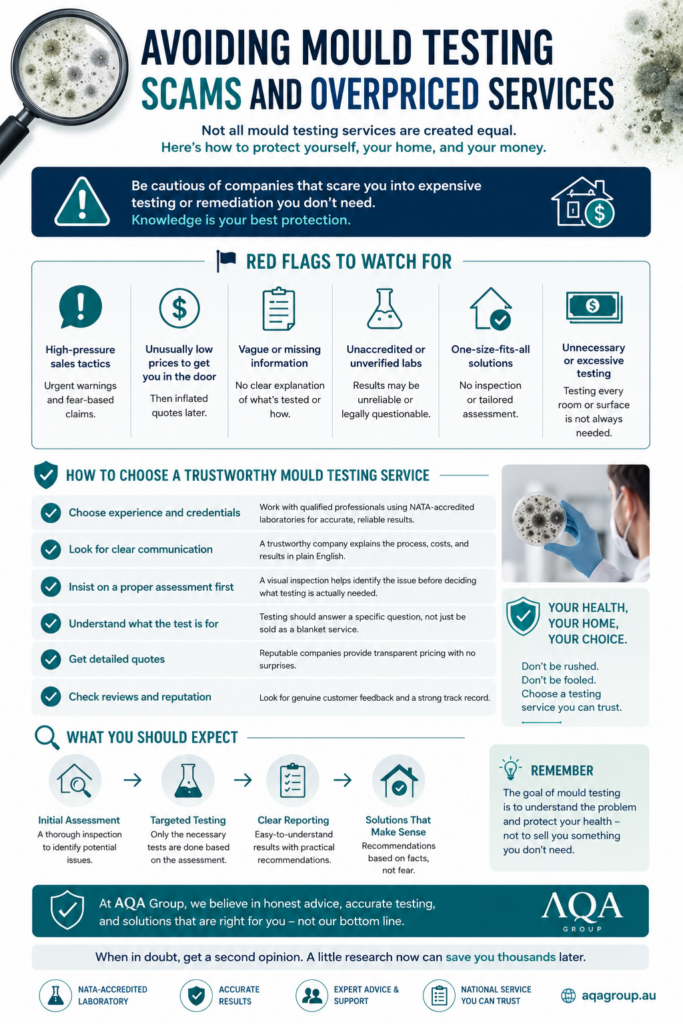
What Are Common Red Flags Homeowners Should Watch For?
Most mould professionals work hard to provide accurate advice and practical solutions. Even so, homeowners should understand some of the warning signs that may indicate an investigation is being driven by sales rather than evidence.
Recognising these patterns can help property owners make better decisions and avoid spending money unnecessarily.
Are Extreme Claims a Warning Sign?
They can be.
Investigators who immediately assume the worst possible outcome without conducting a proper assessment should be approached with caution. Every property is different, and contamination issues vary significantly in severity.
Professional advice should be based on observations, measurements and evidence gathered during the inspection. Broad statements made before the property has been properly assessed may indicate that conclusions have been reached too early.
Should You Be Concerned About High-Pressure Sales Tactics?
Yes.
Homeowners should never feel pressured into making immediate decisions about testing or remediation. A professional investigator should be willing to explain their findings, answer questions and allow clients time to consider their options.
Pressure-based tactics often prioritise revenue over problem-solving. Evidence-based investigations focus on understanding the building and developing appropriate recommendations rather than creating urgency.
How Can Homeowners Evaluate Testing Recommendations?
Not every testing recommendation is unnecessary. Air testing, surface testing, dust testing and specialised analyses can all play valuable roles when used appropriately.
The key is understanding why testing is being recommended and how the information will be used.
What Questions Should You Ask?
Homeowners should feel comfortable asking why a particular test is being recommended, what information the results may provide and how those results will influence the investigation.
A qualified professional should be able to explain these details clearly. If the purpose of testing cannot be explained in plain language, it may be worth seeking additional advice before proceeding.
Should Investigators Explain the Limitations?
Absolutely.
Every testing method has strengths and limitations. Professional investigators should explain both. Understanding what a test can and cannot reveal is important for making informed decisions.
Transparent communication helps set realistic expectations and reduces the likelihood of misunderstandings once results are available.
Why Does Independent Advice Matter?
One of the challenges homeowners face is determining whether recommendations are truly objective. In some situations, the same company may carry out inspections, testing and remediation work.
While this arrangement is not necessarily inappropriate, homeowners should understand how recommendations are being developed and whether independent advice is available.
Can Independent Assessments Reduce Risk?
Independent assessments often provide an objective picture of the property’s condition before major remediation decisions are made. This helps homeowners evaluate recommendations and compare options more effectively.
An independent assessment may also identify situations where extensive testing or remediation is not required, potentially saving significant time and money.
Why Is Objectivity So Important?
Mould investigations often involve substantial financial decisions. Homeowners may be considering repairs, testing programmes or remediation projects that require significant investment.
Objective advice helps ensure those decisions are based on evidence rather than sales targets. This generally leads to better outcomes and greater confidence in the recommendations provided.
How Can Homeowners Protect Themselves?
The best protection against unnecessary expenses is a basic understanding of how moisture, mould growth and environmental investigations work. Homeowners who know what a proper investigation looks like are better placed to evaluate the advice they receive.
You don’t need to become an expert in building science. However, understanding how investigations should work can help you identify advice that is practical, reasonable and grounded in evidence.
Why Is Research Important Before Hiring Anyone?
Taking time to review credentials, experience and investigation methodology can provide useful insights into how a company operates. Look for professionals who prioritise moisture identification, building assessments and practical solutions rather than those who lead with testing.
A reputable professional should be willing to explain their process clearly and provide realistic expectations from the outset.
Can Second Opinions Be Valuable?
In some situations, yes.
If recommendations involve significant testing costs or extensive remediation work, a second opinion may provide additional perspective. Comparing different approaches can help homeowners make more informed decisions and avoid costly mistakes.
How Can Air Quality Australia Help?
Mould investigations should focus on understanding the building rather than generating laboratory reports. Identifying moisture sources, evaluating contamination pathways and recommending practical solutions are the most important parts of the process.
Air Quality Australia provides professional inspections, moisture assessments and evidence-based environmental investigations designed to help homeowners understand what is happening within their property. Our approach is grounded in building science and practical outcomes — not fear-based recommendations.
When Should You Contact a Professional?
If you are dealing with recurring mould growth, water damage, musty odours or concerns about indoor air quality, professional advice may help identify the source of the problem and determine whether testing is genuinely necessary.
Early investigation often prevents small moisture issues from developing into larger and more costly contamination events.
What Should You Read Next?
This article concludes our series on mycotoxins, mould investigations and environmental testing. By understanding moisture, contamination pathways and evidence-based investigation methods, homeowners can make informed decisions and avoid many of the common mistakes associated with mould-related problems.
Continue reading: Air Testing vs Surface Testing: Which Method Is Right for Detecting Mycotoxins?